My Full-Stack Tech Stack in 2026
I've been building web and mobile apps for over 8 years now, and honestly, my stack has changed a lot over time. I've tried way too many frameworks, chased way too many trends, and wasted time on tools that sounded cool but didn't actually help me ship faster. So here's what I actually use today - the stuff that stuck.
TypeScript everywhere. Seriously, everywhere. I switched from plain JS around 2020 and I genuinely can't imagine going back. It catches so many dumb mistakes before they become bugs - wrong argument types, missing fields, typos in property names. But the real magic is refactoring. Rename something, and the compiler tells you every single place that needs fixing. No more "find and replace and pray." For me, TypeScript isn't optional anymore.
For web stuff, it's React + Next.js all the way. React 19 with Server Components changed how I think about what runs where. And Next.js just handles so much out of the box - routing, SSR, image optimization, deployment. I use the App Router now and honestly, once you get used to it, colocating your layouts and loading states with your routes just makes sense.
State management - it depends. For simple stuff, useState and useContext do the job. For medium apps, Zustand is my go-to because it's tiny and has zero boilerplate. For anything with a lot of API calls, TanStack Query is incredible for caching and refetching. I barely touch Redux anymore. Life's too short for that much boilerplate.
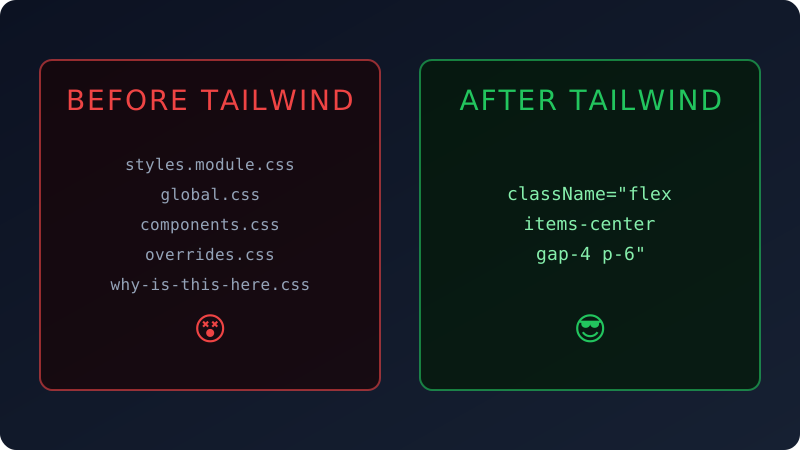
Styling is Tailwind CSS, no question. I know some people hate it at first - I did too. But once it clicks, writing separate CSS files feels so slow. Paired with Shadcn UI for pre-built components, I can go from nothing to a polished UI ridiculously fast. Framer Motion handles all my animations - page transitions, scroll effects, hover states, the works.
Mobile apps are React Native with Expo. Being able to share TypeScript code between my web and mobile projects saves so much time. Expo has gotten really good - EAS Build handles all the iOS/Android headaches, and the managed workflow covers most native module needs without ejecting.
Backend depends on the project size. Express for simple APIs, NestJS for bigger stuff that needs proper structure. Both work great with TypeScript. Database is almost always PostgreSQL. It's reliable, fast, and handles JSON well when I need it. Supabase sits on top and gives me auth, real-time, and storage basically for free. Redis when I need caching. Firebase for the occasional project that needs quick real-time sync.
For deployment, Vercel handles most of my Next.js stuff with zero config. AWS Amplify for projects that need more AWS integration. GitHub Actions for CI/CD - runs my tests and linting on every push, auto-deploys when things pass. Simple and it works.
Look, this stack isn't the "best" stack. It's just what works for me. The most important thing I've learned is to stop chasing every new framework that pops up on Twitter. Pick tools that help you ship, learn them properly, and only switch when something is genuinely better - not just newer.