From Side Projects to Real Products - What I Learned
There's a huge gap between building a side project and shipping a real product. I've been on both sides - the dev who builds cool things that nobody ever uses, and the dev who ships tools people actually depend on. And honestly? The difference isn't about how good your code is. It's about mindset, follow-through, and being willing to do the boring stuff.
My first "real" product wasn't CodeDusk or Dradron Tools. It was a client project - an attendance tracking system for an organization. The day real users started relying on my code to check in members every week, everything felt different. Bugs weren't just annoying anymore - they meant phone calls from confused staff. Downtime wasn't a localhost problem - it meant people couldn't do their jobs. That kind of pressure changes how you think about code quality real fast.
The hardest lesson? Learning to ship imperfect code. We all want our code to be clean, every component perfectly abstracted. But users don't care about your architecture - they care about whether the thing works. I spent weeks polishing the attendance app before launch, making it "production-ready," while the client was still using paper sheets. Shipping something that's 80% there today almost always beats a perfect version next month.
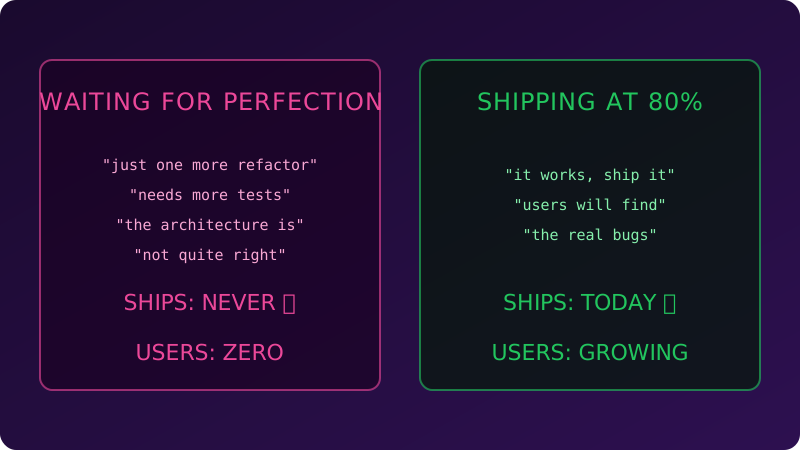
But there's a difference between shipping fast and shipping sloppy. I learned to figure out which corners I could cut and which ones I couldn't. Performance? People notice immediately. Security? Not negotiable, ever. Code organization? Matters for long-term maintenance, but it can wait. Error handling? Critical for production, whatever for a prototype. Knowing where to put your effort is a skill you only get from actually shipping things and seeing what breaks.
Here's something most devs don't want to hear: marketing matters. CodeDusk had like 20 downloads for months after I published it. The code was good, the features were useful, but nobody knew it existed. I started writing better descriptions, adding proper screenshots, sharing it in communities. Downloads started growing. The product didn't change at all - only its visibility did. If you build something great but nobody can find it, it's just a portfolio piece.
And then there's maintenance - the part nobody posts about on social media. Launching is exciting. Getting your first users is awesome. But then Chrome pushes an update that breaks something. A user finds an edge case you never thought of. A dependency drops a breaking change. Keeping a product alive is a commitment, and you gotta be honest with yourself about whether you're up for it.
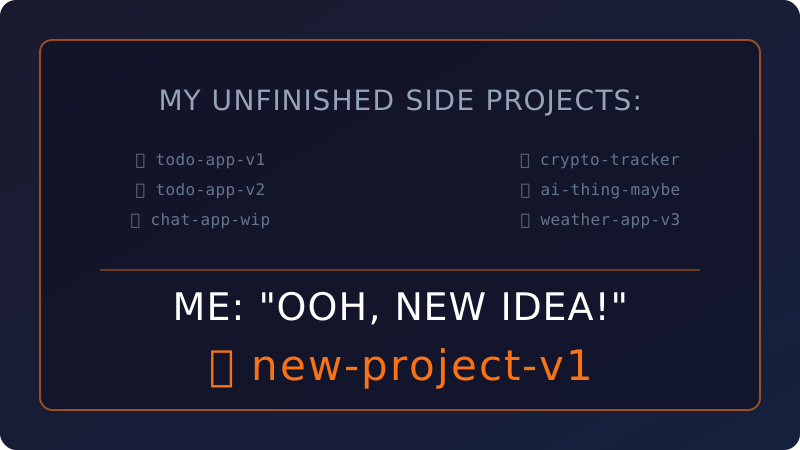
CodeDusk taught me about browser extensions and canvas rendering. Dradron Tools taught me about SEO and how people find utility websites. Client projects taught me about deadlines, communication, and building for someone else's needs instead of my own. Every project teaches you something different if you pay attention.
If you're sitting on side projects that never see the light of day, here's what I'd say: just pick one, set a deadline, and ship it. It doesn't need to be perfect. It doesn't need every feature. It just needs to be usable by one person who isn't you. The feedback you get from real users will teach you more than any tutorial ever could. And once you've shipped one thing, the next one gets so much easier.